Allure hosting control panel: Real Estate Schedule Next Consultation
An annuity can be used in real estate sales as an alternative to receiving a single lump-sum payment. In such a scenario, the seller transfers property ownership to a buyer in exchange for a series of regular income payments, which can be for a fixed term or for the rest of the seller's life (a life annuity).
Montreal Office - Agent ID: 456 (Administrates customers receiving initial lump-sum payment, securing lifelong income stream, and allowing them to remain in their home in an occupied life annuity scenario.)
Acquires property at reduced price, spreads purchase cost over long period, can take possession/rent out (Free life annuity only).
Files Performing the Contract
Signed_Contract_REA_2025_0042.pdf
Title_Deed_Transfer_Nov_1st_2025.pdf
Buyer_Solvency_Verification.pdf
Payment_Schedule_Indexation_Clause.xlsx
Specific model composition to private creation in resort.
Modeling & figurative context of creation
Creating content for "innate synthetic" products-materials or systems that mimic the functional properties of natural organisms-requires a strategic blend of education, inspiration, and technical explanation. The key is to translate complex science into compelling, relatable narratives for diverse audiences.
Customer Experience (CX):
TLD Files Performing the Contract: Sign the listing agreements
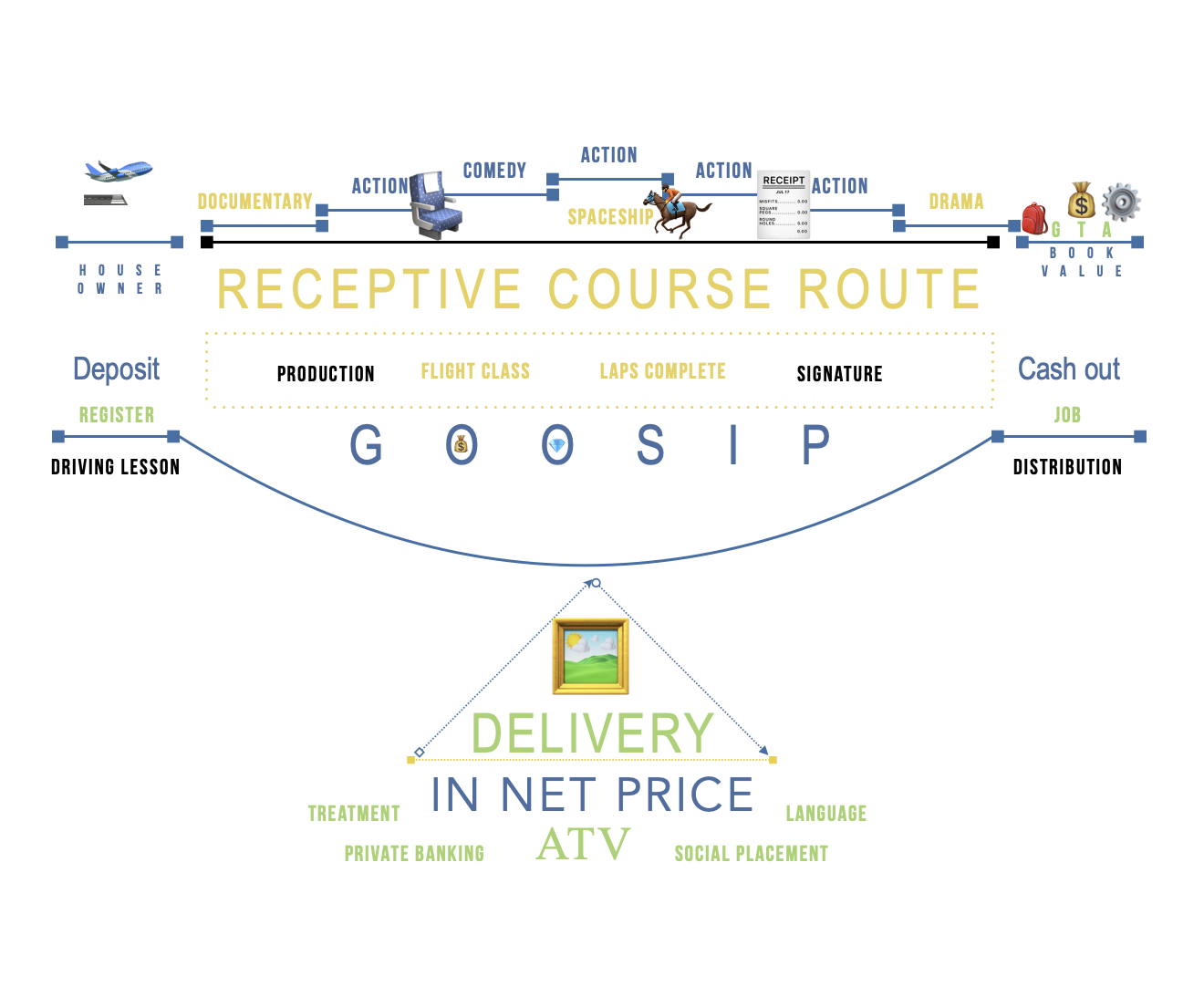
This critical step involves formally signing listing agreements for the TLDs, ensuring all partnerships are contractually sound, much like a passenger signing terms and conditions or having their ticket validated before boarding.
Buy a domain name:
Acquiring the initial domain name for the project, similar to purchasing a flight ticket.
Markup consolidators:
Adjusting prices for consolidators, like adjusting ticket prices based on demand and availability.
Enter the owner with hyperlink market:
Linking the domain owner to the market, akin to a passenger entering the boarding gate area.
Markdown depreciation date increase pressure:
Managing depreciation and market pressure, similar to an airline managing flight capacity and scheduling.
Sales Conversation Framework
A sales conversation framework, often applied when using a database for lead generation, follows a structured progression through an opening, middle, and closing phase. The use of a database allows for personalization in the opening and middle sections based on collected prospect data.
Opening (The Approach & Qualification)
Establish Connection & Credibility: Introduce yourself and your company clearly. Mention a specific, personalized observation from the database research to show you've done your homework (e.g., "I noticed your company recently expanded into X market...").
Set Expectations: Acknowledge their time is valuable and ask for permission to continue the conversation (e.g., "I know you're busy, do you have two minutes for me to explain why I called?").
Initial Qualification: Ask one or two high-level, open-ended questions to confirm they align with your target persona and have a potential need.
Middle (The Presentation & Handling Objections)
Discover Pain Points: Use active listening and open-ended questions to encourage the prospect to share their challenges and needs (e.g., "How are you currently handling [specific problem]?").
Present the Value Proposition: Based on the identified pain points, explain how your solution specifically addresses those challenges. Reference past success stories with similar clients if available in your database to build social proof.
Handle Objections: Be prepared for common objections (e.g., "send me more info," "we're not interested") and have ready responses that steer the conversation back to the value you offer or push for the next step.
Closing (The Commitment & Next Steps)
Propose a Clear Next Step: Instead of asking for a commitment to buy immediately, propose a concrete, low-risk next step, such as a scheduled demo, a follow-up meeting, or sending a tailored piece of information.
Confirm Logistics: Agree on a specific date, time, and attendees for the next interaction and repeat it back to them to ensure alignment.
Express Appreciation & Follow-Up: Thank them for their time and immediately update your database with all relevant information discussed during the call to facilitate smooth follow-up and internal tracking.
Sales Process for Tour Operators and Consolidators
The sales process for a tour operator selling customer experiences (tours, activities, packages) to a consolidator follows a structured approach, allowing both entities to leverage the partnership to reach a wider market and increase revenue.
Stage 1: Prospecting and Onboarding
Prospecting: The tour operator identifies potential consolidators who operate in similar markets, match their brand values, and have strong distribution capabilities. Consolidators often specialize in specific regions, market niches, or multi-stop destinations.
Initial Contact and Negotiation: The operator reaches out to discuss potential collaboration, commission rates, and access to unpublished "net fares".
Onboarding and Integration: Once an agreement is reached, the consolidator provides access to its online booking system or API/XML integration. The tour operator’s inventory (products, pricing, availability) is loaded into the consolidator's platform, ensuring seamless data exchange between systems.
Stage 2: Portfolio Planning and Execution
Product Development and Bundling: The tour operator and consolidator collaborate to bundle individual services (flights, hotels, activities, car rentals) into attractive packages. This allows for competitive pricing while maintaining margins.
Pricing Strategy: The consolidator typically sets a "net fare" or wholesale price, and the tour operator (as the reseller) then adds a markup to this price to earn their commission, while still offering the end customer a good deal.
Marketing and Sales Execution: The consolidator often assists in marketing these new packages to their extensive network of travel agents, who then actively promote them to the end consumer.
Stage 3: Ongoing Monitoring and Maintenance
Performance Monitoring: Both parties track sales metrics, popular routes, and customer feedback to optimize the offerings. Data analytics tools help track the effectiveness of different strategies.
Issue Resolution and Support: A support structure (e.g., dedicated service desk) is in place to handle unexpected issues, such as schedule changes, last-minute cancellations, or complex itinerary adjustments, taking the administrative load off the retail agents.
Inventory and Price Updates: Regular maintenance of the inventory management system ensures real-time updates of pricing and availability.
Stage 4: Retention or Off-Boarding Provision
Retention and Relationship Management: The goal is long-term business. Building trust, offering competitive pricing, and providing excellent support help ensure repeat business and strong retention rates.
Contract Review and Renewal: Periodic reviews of the contract ensure that the terms, commission rates, and objectives remain aligned with market trends and the needs of both parties.
Off-boarding/Exit Strategy: In the event the partnership needs to end, clear provisions and a transition plan are established to ensure a smooth handover of existing client relationships, documentation, and pending bookings.
Plasma Energy Devices (Plasma Fibroblast Therapy)
This technique uses a pen-like device to create a targeted, high-frequency electric current (plasma arc) that causes micro-injuries in the skin's superficial layer. This controlled damage triggers the body's natural wound-healing response, stimulating fibroblasts to produce collagen and causing immediate tissue contraction and tightening.
Common applications include:
Prime Time Step (Prepare Documentation):
Preparation involves creating and reviewing all necessary documentation, ensuring all safety and procedural guidelines are in order before any practical steps are taken, mimicking checking travel documents before a flight.
Prime Time Step (Review Procedures):
Review the step-by-step instructions of the task ahead, ensuring familiarity with the process, much like reviewing seat assignments and boarding zones.
Prime Time Step (Inspect Equipment):
Inspect all tools and equipment for proper function and safety compliance, equivalent to checking the aircraft's physical readiness.
Prime Time Step (Maintain Safety Standards):
Maintain a constant awareness of the surrounding environment and follow all safety protocols throughout the process, akin to following onboard safety instructions.
Prime Time Step (Execute Task Efficiently):
Execute the defined task with precision and efficiency, ensuring minimal disruption and correct completion, just like a smooth and timely boarding process.
The designer passenger Entry-level for installation and maintenance learning as new member approaches, leverage the regenerative properties associated with plasma to offer natural, minimally invasive options for aesthetic enhancement.
Specimen (Void) Cheque online for negotiation, deposit, or payment in network service.
Volkswagen...InteractiveDrive.html
Specimen Acquisition Process & Tour Operator Sales Framework
Hobbyist Who Acquire Specimens for Their Collection (after Step #1 Begin)
#2-Sign The Grand Challenges consumer notice.
#3-Establish market value range.
#4-Finalize list price.
#5-Sign listing agreements.
#6-Prepare house for sale.
#7-Marketing plan in place.
#8-Showing/feedback 30-day.
#9 Offer presented, negotiated, signed Framework for a tour operator's sales distribution.
#10-Receive 1st deposit
Tour Operator Sales Distribution Model
Direct Consumption and Social Media
Direct Sales: Tour operators can sell directly to the end consumer through their own websites and social media platforms, allowing for full control over pricing, branding, and the customer experience.
Negotiated Social Media Profiles: The operator leverages engaging photos and videos of tours on platforms like Instagram to generate interest and capture customer details (leads) through targeted communications, such as direct messages or lead forms.
Distribution to Brokers (Indirect Sales)
Intermediaries: The operator also uses brokers (travel agents, online travel agencies, tour wholesalers) as intermediaries to reach a wider audience. These partners often provide a net rate to the operator and add their own commission.
"Direct Consumption" via Brokers: The concept of "direct consumption" in this context refers to the end customer consuming the tour experience, even if they booked it through an indirect channel (broker), who managed the transaction logistics.
Data Handoff Mechanisms
Hard Hand-off (Break-before-Make): The tour operator completely severs control of the customer relationship and data before the broker establishes their connection. The customer's information is transferred entirely to the broker's system (e.g., via manual entry or a single data dump), and the operator may lose visibility or direct engagement with that customer post-sale. This is a complete transfer of responsibility.
Soft Data Storage Market Hand-off (Make-before-Break): This approach facilitates a more seamless customer experience by maintaining some continuity. The operator's system maintains a connection or shared view of the customer data while the broker also establishes their connection. This allows for a smoother transition, preventing data loss or service interruption, and potentially allowing the operator to still engage in targeted nurturing communications without directly handling the booking process itself. The data is stored in a shared or integrated market data storage system.
Related Concepts: Telecommunications and Financial Investment Programs
Telecommunications: Hard vs. Soft Hand-off
Hard Hand-off: Existing connection must be broken when the new one is established. Allocates different frequencies. The mobile station first terminates the connection with the serving base station (source cell) and then initiates a new connection with the target base station (destination).
Soft Hand-off: New connection is established before the old one is released. Allocates the same frequency. The receiver in the mobile device (or in the network for the uplink signal) uses a specialized component, like a PITCH MARKET PLACE receiver, to combine the signals received from multiple base stations. This process, known as macro-diversity or diversity gain, enhances signal quality, reduces noise, and minimizes the chance of dropped calls, especially at cell boundaries where signals might fade.
Step 1 (Initial Investment): Passengers receive $10,000 (Motion picture Gross) and must buy at least two different stocks.
Step 2 (Monitoring): Passengers must record the market price of their stocks at three different intervals each month (approx. every 10 days) for a total of 12 data points.
Step 3 (Charting Progress): Passengers are instructed to chart the stock progress using a computer program or graph paper.
Step 4 (Analysis and Reflection): On a separate webpage (alluremedia.house/Booking.html), passengers calculate profit or loss, explain their experience, and reflect on what they learned from investing.